


Hearing & Brain Health
Science now tells us that looking after our hearing health is great for brain health too.
The Connection Between Hearing Loss and Cognitive Health
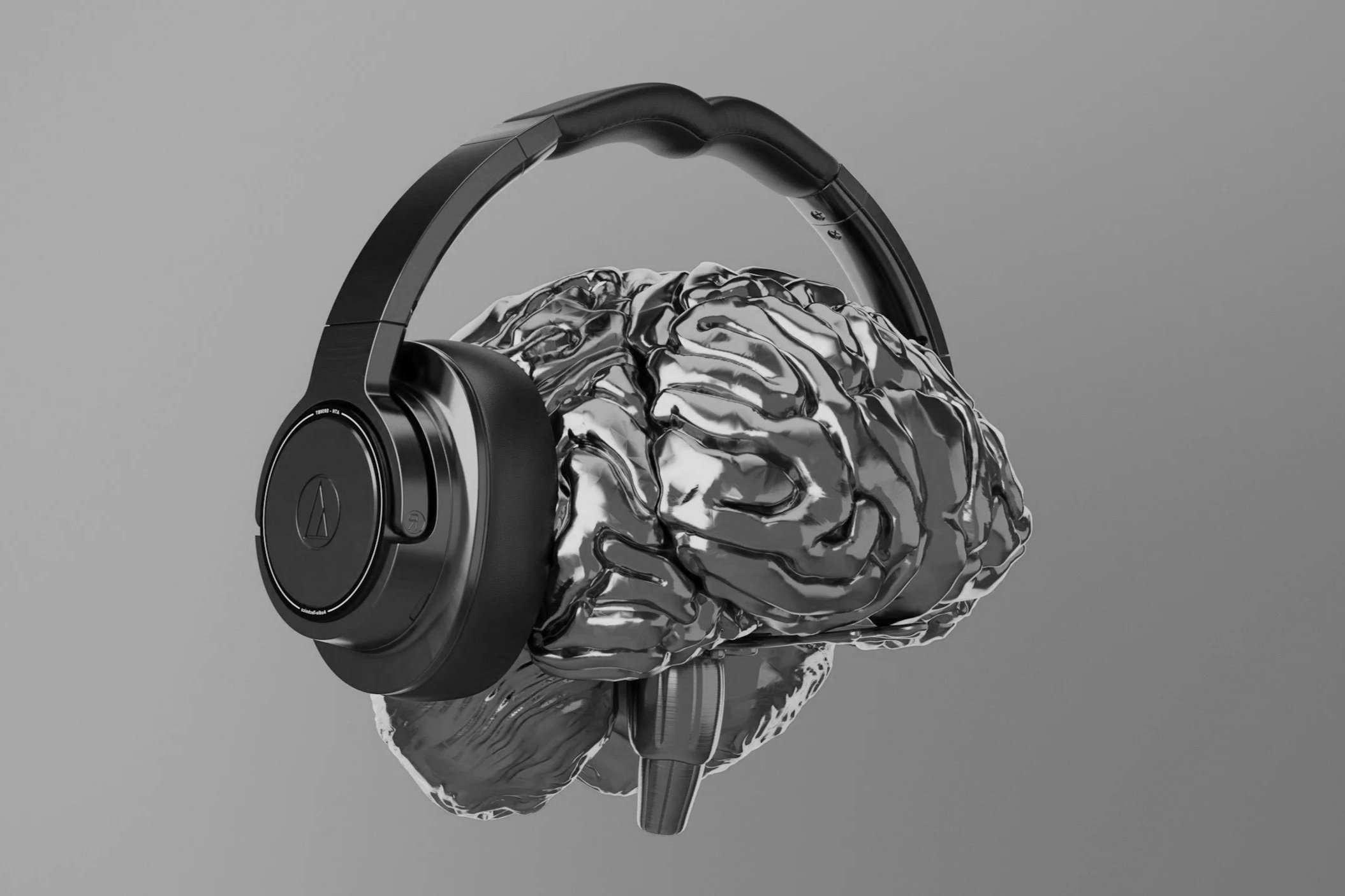
Even a mild hearing loss can increase the effort required for the brain to understand speech. When the auditory system is not receiving a clear signal, the brain must work harder to fill in the missing pieces of conversation. This increased listening effort, known as cognitive load, can draw resources away from memory, concentration, mental processing speed and other higher cognitive functions.
Over time, sustained listening effort may contribute to fatigue, reduced confidence in communication, social withdrawal, and measurable changes in cognitive performance. Research increasingly demonstrates that hearing health and brain health are closely interconnected. Studies led by Dr Frank Lin at Johns Hopkins University have shown an association between hearing loss and an increased risk of cognitive decline, while the landmark ACHIEVE study found that proactively improving your hearing may help slow cognitive decline in older adults at increased risk, reinforcing the importance of early identification and appropriate management of hearing difficulties.
Soundwell is a proprietary program developed exclusively by Deane Audiology, drawing on more than 25 years of clinical experience. It focuses on the important relationship between hearing and cognitive health, recognising that successful communication depends not only on how well we hear, but also on how effectively the brain processes and interprets sound.
Rather than assessing hearing in isolation, Soundwell combines comprehensive hearing assessment with evidence-based cognitive screening to provide deeper insight into hearing efficiency, listening effort and cognitive performance. For many patients, this offers a valuable second opinion on cognitive wellbeing, helping identify whether changes in communication may be related primarily to hearing, cognitive processing, or a combination of both. While Soundwell is not designed to diagnose cognitive impairment, it can help identify areas that warrant further discussion with your GP or specialist and establish an objective baseline for ongoing monitoring.
Grounded in contemporary neuroscience and supported by validated clinical assessment tools, Soundwell provides objective measurement, ongoing monitoring and personalised guidance. It is not simply about testing hearing or memory in isolation; it is about understanding how well the auditory system and brain are working together, and helping optimise that partnership to support communication, independence and quality of life throughout the ageing journey.
Science now tells us that looking after our hearing health is great for brain health too.
The Connection Between Hearing Loss and Cognitive Health

Even a mild hearing loss can increase the effort required for the brain to understand speech. When the auditory system is not receiving a clear signal, the brain must work harder to fill in the missing pieces of conversation. This increased listening effort, known as cognitive load, can draw resources away from memory, concentration, mental processing speed and other higher cognitive functions.
Over time, sustained listening effort may contribute to fatigue, reduced confidence in communication, social withdrawal, and measurable changes in cognitive performance. Research increasingly demonstrates that hearing health and brain health are closely interconnected. Studies led by Dr Frank Lin at Johns Hopkins University have shown an association between hearing loss and an increased risk of cognitive decline, while the landmark ACHIEVE study found that proactively improving your hearing may help slow cognitive decline in older adults at increased risk, reinforcing the importance of early identification and appropriate management of hearing difficulties.
Soundwell is a proprietary program developed exclusively by Deane Audiology, drawing on more than 25 years of clinical experience. It focuses on the important relationship between hearing and cognitive health, recognising that successful communication depends not only on how well we hear, but also on how effectively the brain processes and interprets sound.
Rather than assessing hearing in isolation, Soundwell combines comprehensive hearing assessment with evidence-based cognitive screening to provide deeper insight into hearing efficiency, listening effort and cognitive performance. For many patients, this offers a valuable second opinion on cognitive wellbeing, helping identify whether changes in communication may be related primarily to hearing, cognitive processing, or a combination of both. While Soundwell is not designed to diagnose cognitive impairment, it can help identify areas that warrant further discussion with your GP or specialist and establish an objective baseline for ongoing monitoring.
Grounded in contemporary neuroscience and supported by validated clinical assessment tools, Soundwell provides objective measurement, ongoing monitoring and personalised guidance. It is not simply about testing hearing or memory in isolation; it is about understanding how well the auditory system and brain are working together, and helping optimise that partnership to support communication, independence and quality of life throughout the ageing journey.
Listening Effort and Cognitive Load

For many people, hearing loss is not simply about sounds becoming quieter—it is about conversations becoming harder to understand. As hearing changes, the brain often needs to work much harder to fill in missing words, interpret unclear speech, and make sense of conversations, particularly in noisy environments.
This increased mental effort is known as cognitive load. Instead of effortlessly following a conversation, the brain must dedicate additional attention and memory resources simply to understanding what has been said. Many people describe this as feeling mentally exhausted after social gatherings, meetings, or extended conversations, even though they have not been physically active.
Over time, increased listening effort may affect more than communication alone. When so much mental energy is directed towards hearing, fewer cognitive resources may be available for remembering information, participating confidently in conversations, or enjoying social interactions. This does not mean hearing loss causes cognitive impairment, but it highlights how closely hearing and brain function work together.
Appropriately managing hearing loss can help reduce unnecessary listening effort by improving access to speech and environmental sounds. The goal is not simply to make sounds louder, but to allow the brain to process sound more efficiently, more naturally, making communication less tiring and more enjoyable.
Cognitive Screening for Hearing Loss & Brain Health

Hearing and cognitive health are closely connected. Research from Johns Hopkins University, the National Institute on Aging and the ACHIEVE study has strengthened our understanding of hearing loss as a modifiable risk factor for cognitive decline. When hearing becomes more difficult, the brain must work harder to understand speech, particularly in challenging listening environments such as restaurants, meetings or family gatherings. Over time, this increased listening effort can contribute to mental fatigue, reduced concentration and communication difficulties that may be mistaken for changes in memory or cognition. Research has shown that untreated hearing loss is associated with an increased risk of cognitive decline. While hearing loss does not directly cause dementia, it is now recognised as one of the largest potentially modifiable risk factors for cognitive decline later in life. This makes early identification and management of hearing difficulties an important part of maintaining overall brain health. Cognitive screening provides an objective snapshot of how certain aspects of brain function are performing at a point in time. When combined with a comprehensive hearing assessment, cognitive screening can help distinguish between difficulties primarily related to hearing, those related to cognitive processing, or a combination of both. This deeper understanding allows for more personalised recommendations, appropriate referrals to medical professionals and more effective hearing rehabilitation strategies. At Deane Audiology, cognitive screening forms part of our Soundwell program. Using validated assessment tools and evidence-based protocols, we establish a baseline measure that can be monitored over time. For many people, this provides reassurance that cognitive function is performing as expected. For others, it may highlight areas that warrant further investigation or discussion with their medical practitioner. Importantly, cognitive screening is not a diagnosis. Rather, it is a proactive approach to understanding how hearing and brain health are working together, helping support communication, independence and quality of life throughout the ageing journey.
Understanding Cognitive Screening (MoCA®)

As we age, it is natural to become more aware of changes in both hearing and memory. Many people wonder whether they are simply having difficulty hearing conversations or whether something more may be affecting their thinking and memory. Because hearing and brain function are closely connected, it is important to consider both when assessing cognitive health.
The Montreal Cognitive Assessment (MoCA®) is a widely used cognitive screening tool designed to identify subtle changes in areas such as attention, memory, language, executive function, visuospatial skills, and thinking speed. It is used internationally by trained healthcare professionals as an early screening measure when there are concerns about cognitive function.
It is equally important to understand what the MoCA® is not. It is not a diagnostic test for dementia or other neurological conditions, nor does a single score provide a diagnosis. Rather, it is one component of a broader clinical assessment that may indicate whether further medical investigation is appropriate.
Hearing plays an important role in cognitive screening. If a person is unable to hear instructions clearly or has difficulty understanding spoken information because of untreated hearing loss, their performance on cognitive tests may be affected. For this reason, hearing should be considered whenever cognitive screening is undertaken.
To help address this, a hearing-adapted version of the assessment, known as the MoCA®-H (Hearing Impaired version), has been developed. Rather than relying on spoken instructions and verbal test items, the MoCA®-H presents information visually, reducing the impact that hearing loss may have on test performance. This allows cognitive abilities to be assessed more accurately in people with hearing impairment and helps minimise the risk of hearing difficulties influencing the screening results.
Research has also shown that untreated hearing loss can increase cognitive load—the extra mental effort required to listen and understand speech. When the brain is working harder simply to hear conversations, fewer cognitive resources may be available for memory, comprehension, and other thinking tasks. Improving access to sound through appropriate hearing rehabilitation may help reduce this unnecessary listening effort and support more effective communication.
As a certified MoCA® practitioner, Deane Audiology incorporates cognitive screening where clinically appropriate as part of a holistic approach to hearing and brain health. Where hearing loss is present, we carefully consider which version of the assessment is most appropriate and always interpret the results within the context of your hearing, communication abilities, and overall clinical presentation.
For people interested in taking a proactive approach to healthy ageing, our Soundwell Program brings together hearing assessment, brain health education, communication strategies, and personalised hearing rehabilitation to support both hearing and cognitive wellbeing. By considering the hearing system and the brain together, we aim to help people remain engaged, connected, and confident throughout life.

Did you know?
It has been estimated that approximately 8% of dementia cases worldwide may be attributable to untreated hearing loss, making hearing loss one of the largest potentially modifiable risk factors identified by the The Lancet Commission on Dementia Prevention, Intervention and Care. This does not mean hearing loss causes dementia, but it highlights the importance of identifying and managing hearing loss as part of a healthy ageing strategy.
Dementia Prevention & Healthy Ageing

While there is currently no guaranteed way to prevent dementia, research shows that many of the factors influencing brain health are within our control. Maintaining good hearing, staying physically active, prioritising quality sleep, eating a nutritious diet, managing cardiovascular health, and remaining socially connected can all contribute to healthy ageing and may help reduce the risk of cognitive decline later in life.
Our understanding of dementia has evolved significantly in recent years. Rather than being an inevitable part of ageing, cognitive decline is now recognised as being influenced by a combination of genetic, environmental and lifestyle factors. Importantly, many of these factors are modifiable. Regular physical activity supports blood flow to the brain, promotes neuroplasticity and is associated with better cognitive performance throughout life. Equally important is restorative sleep, which allows the brain to consolidate memories, clear metabolic waste products and support overall cognitive function.
Nutrition also plays a key role in brain health. Diets rich in vegetables, fruits, whole grains, healthy fats and lean proteins have been associated with improved cognitive outcomes and reduced risk of age-related decline. Managing conditions such as high blood pressure, diabetes and elevated cholesterol further supports both cardiovascular and cognitive wellbeing.
Hearing health is increasingly recognised as an important part of this picture. Difficulty hearing can lead to increased listening effort, reduced social engagement and communication challenges that may place additional strain on cognitive resources. Early identification and management of hearing loss helps support communication, independence and quality of life as we age, and understanding your current status is something we are very happy to help with.
The landmark 2020 Lancet Commission on Dementia Prevention, Intervention and Care identified hearing loss as one of the most significant potentially modifiable risk factors for dementia, alongside factors such as physical inactivity, smoking, social isolation and cardiovascular disease. Together, these findings reinforce the importance of taking a proactive, whole-person approach to healthy ageing and lifelong brain health.
Taking a proactive approach does not necessarily mean wearing hearing aids. It means understanding your hearing, monitoring changes over time, and making informed decisions that support your long-term health and wellbeing. Just as regular eye examinations help protect vision, periodic hearing assessments can help preserve one of our most important senses as we age.
How Hearing Loss Affects the Brain

Hearing is not simply an ear function—it is a brain function. While our ears detect sound, it is the brain that gives meaning to what we hear. When hearing loss develops, the brain receives a less complete and less precise auditory signal, making speech understanding more difficult and increasing the effort required to follow conversations.
In the early stages of hearing loss, many people are unaware of the extra work their brain is performing. The brain has a finite amount of cognitive energy available each day. When hearing becomes more difficult, a larger proportion of those resources must be allocated to understanding speech, leaving fewer resources available for memory, concentration, decision-making and social engagement. This process is what we describe as cognitive depletion. Many of our clients describe this as feeling mentally tired after social events, meetings or prolonged conversations, even despite appearing to hear reasonably well.
When hearing loss remains untreated for extended periods, changes can occur within the brain itself. Research has shown that reduced auditory stimulation may lead to cortical reorganisation, where areas of the brain normally dedicated to processing sound become increasingly recruited for visual processing and other sensory functions. In practical terms, individuals often become more reliant on lip reading, facial expressions and contextual cues to understand speech. While these adaptations can be helpful, they may reduce the brain's efficiency in processing auditory information alone.
Over time, this reduced stimulation of the auditory pathways may contribute to poorer speech understanding, particularly in complex listening environments such as restaurants, family gatherings and group conversations. Importantly, simply making sounds louder does not always fully address these difficulties, as the challenge may involve how the brain is processing and interpreting sound rather than hearing volume alone.
The duration of hearing loss can also influence how successfully a person adapts to hearing technology. When hearing difficulties have been present for many years, the brain may have spent a prolonged period receiving reduced auditory input and relying more heavily on compensatory strategies. While modern hearing aids can restore access to sounds that may have been missing, the brain often requires time and practice to relearn how to interpret those sounds efficiently.
This is one reason why two people with a similar hearing loss can experience very different outcomes with hearing technology. Success is influenced not only by the degree of hearing loss, the nature of the loss, and also how long the hearing impairment has been present, the extent of auditory deprivation, cognitive function, motivation and consistent device use. For this reason, early identification and management of hearing loss is important. By maintaining stimulation of the auditory pathways and supporting the connection between hearing and brain function, timely intervention can help preserve communication ability, listening confidence and long-term hearing health.
Research has demonstrated that untreated hearing loss can lead to cross-modal cortical reorganisation, where auditory areas of the brain become increasingly recruited for visual processing, reinforcing the importance of maintaining auditory stimulation throughout life (Campbell & Sharma, 2014).
Tinnitus, Attention and Brain Health

Tinnitus provides a fascinating example of the close relationship between hearing and the brain. Although tinnitus is often described as "ringing in the ears", modern research has shown that it is not simply an ear condition. Instead, it involves the way the brain detects, interprets, and responds to sound.
Many people experience tinnitus from time to time, yet not everyone finds it bothersome. One of the reasons lies in the brain's attention networks and emotional processing systems. When the brain interprets tinnitus as something important or potentially threatening, it naturally directs more attention towards the sound. At the same time, areas of the brain involved in emotion and the body's stress response can become engaged, making tinnitus seem more noticeable and more difficult to ignore.
This creates a cycle where increased attention leads to greater awareness, which in turn reinforces the brain's focus on the tinnitus. Importantly, it is often the brain's response to the sound—not simply the sound itself—that determines how disruptive tinnitus becomes.
This understanding forms the basis of the Neurophysiological Model of Tinnitus, developed by Professor Pawel Jastreboff. The model explains that tinnitus distress is influenced not only by the auditory system, but also by the brain's attention networks, the limbic system (which processes emotions), and the autonomic nervous system (which regulates the body's stress response). When these systems begin treating tinnitus as something important or threatening, the sound is given greater priority by the brain and becomes increasingly difficult to ignore.
The encouraging news is that the brain is remarkably adaptable. Through a process known as habituation, many people gradually become less aware of their tinnitus as the brain learns that it does not represent a threat requiring constant attention. This principle underpins many modern, evidence-based tinnitus management approaches.
Understanding the connection between tinnitus, attention, and the brain helps explain why comprehensive management often extends beyond the ears alone. By optimising hearing, reducing unnecessary listening effort, supporting emotional wellbeing, and helping the brain respond differently to tinnitus, many people find it becomes far less intrusive over time.
The Soundwell Program

Hearing and brain health are closely connected, which is why Deane Audiology developed the Soundwell Program, a comprehensive approach designed to support healthy hearing, effective communication, and cognitive wellbeing throughout life.
Rather than focusing solely on hearing tests or hearing aids, the Soundwell Program brings together evidence-based hearing assessment, speech-in-noise testing, hearing and brain health education, communication strategies, cognitive screening where appropriate, and personalised hearing rehabilitation. The program recognises that hearing health is only one part of maintaining an active, connected, and fulfilling life.
Every person's hearing journey is different. Some people require reassurance and ongoing monitoring, while others benefit from hearing technology, communication coaching, or referral to other healthcare professionals. The Soundwell Program provides an individualised pathway that reflects your hearing, lifestyle, communication goals, and long-term wellbeing.
Whether your goal is to stay socially connected, reduce listening effort, support healthy ageing, or simply gain a better understanding of your hearing, the Soundwell Program provides a proactive framework built on current clinical evidence and personalised care.
Learn more about how the Soundwell Program supports hearing and brain health.
Taking a Proactive Approach to Hearing & Brain Health

One of the most positive developments in modern hearing healthcare is the growing recognition that hearing health is an important part of overall brain health. Rather than waiting until communication becomes significantly affected, many people are choosing to monitor their hearing and take action earlier, allowing them to remain engaged, independent, and connected throughout life.
A proactive approach begins with understanding your hearing. Regular hearing assessments establish a baseline, identify changes as they occur, and provide valuable information that supports informed decision-making. For those already experiencing hearing loss, timely intervention may help reduce listening effort, improve communication, and support continued participation in the activities that matter most.
Looking after hearing health also means looking after overall wellbeing. Staying physically active, maintaining social connections, protecting your ears from excessive noise, getting adequate sleep, and seeking professional advice when hearing changes occur all contribute to healthy ageing.
At Deane Audiology, we believe hearing care is about far more than diagnosing hearing loss or fitting hearing aids. It is about helping people maintain confidence, independence, and quality of life through personalised, evidence-based care. By understanding the connection between hearing and the brain, you can take positive steps today that support your communication, wellbeing, and long-term health for years to come.
“The comprehensive test, thorough explanation, and commitment to whole-person health truly stood out. We’ve already recommended Deane Audiology to others.”
– Barbara H, Book-Keeper